
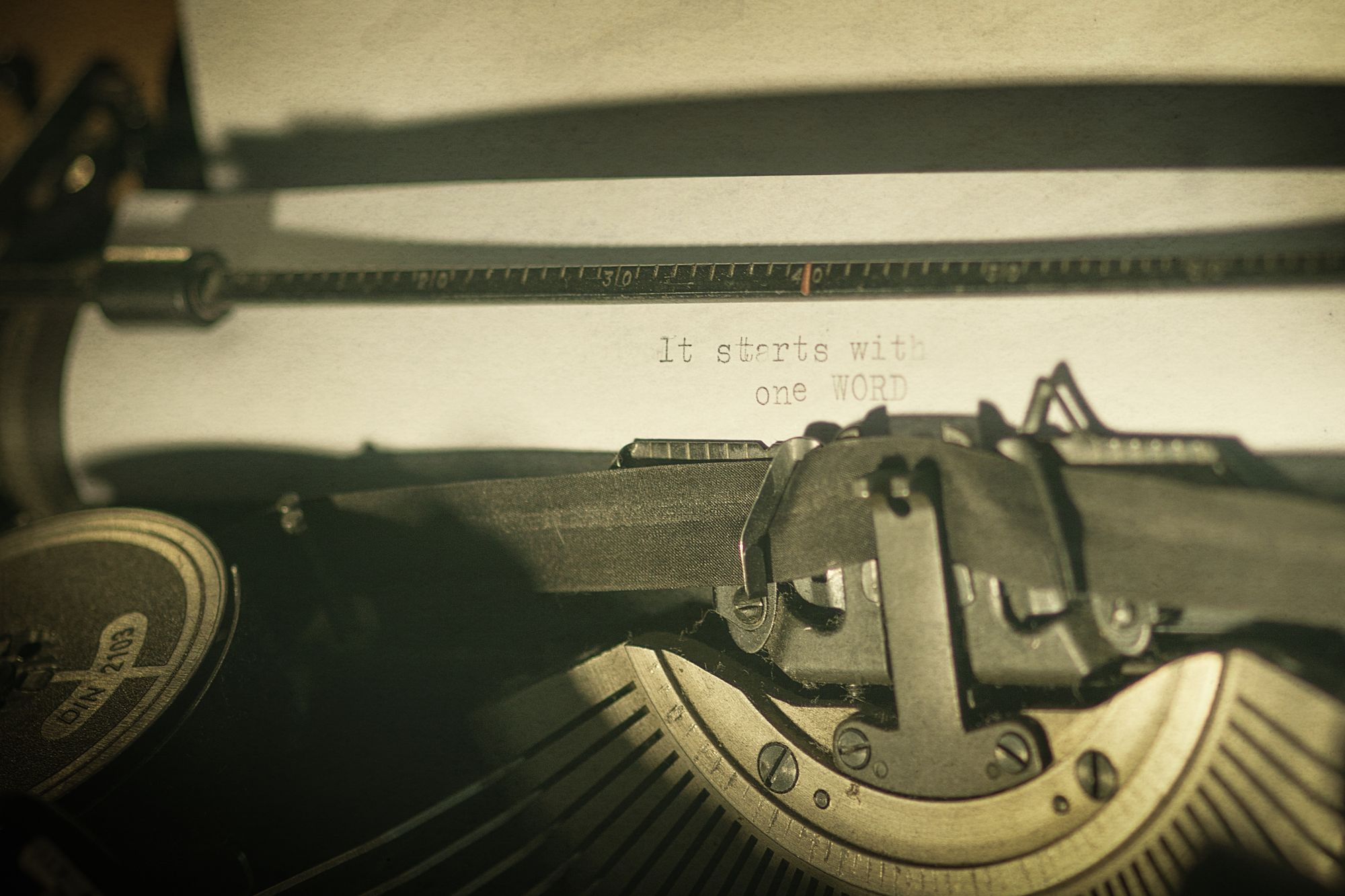
As you go into any writing challenge, you should know it’s not about winning or losing, succeeding or failing. It’s about committing to the idea that for the next 30 days, writing is your priority. As long as you put words on paper, it doesn’t really matter how many words you end up with. Forward momentum is the underlying purpose, as much momentum as you can manage in 30 days. Committing to the craft is the main goal. Allowing yourself the time, the energy, and the space to dedicate yourself to writing. That’s why we do writing challenges.
Having said that, it’s also important to understand that 1,667 words every day for 30 days does not produce a polished novel. Realistically it will be a rough draft. And that is as it should be. You can be fast or you can be precise, but you can’t be both at the same time.
How Many Words a Day Is 50,000 Words in 30 Days?
When you break down 50,000 words over thirty days you end up with roughly 1,667 words per day. Not everyone can or want to write every single day, though, but that doesn’t mean you can’t reach 50k in 30 days. You just have to plan for a different schedule. Here are some alternatives:
- 6 days/week ≈ 1,923 words/day
- 5 days/week ≈ 2,273 words/day
- Fridays + Saturdays + Sundays ≈ 4,167 words/day
Even if your intention is to write every day you might want to aim just a little bit over 1,667 words per day, just to give yourself some breathing room for days when stuff happens, as it tends to.
Decide Your Writing Schedule
Just like you would block off time in your calendar at work for meetings, you should block off time in your calendar (whether it’s real or internal) for writing.
Look at your previous writing habits. Do you work better at night or in the morning? One long session or several shorter? Use your existing routines as an anchor when you set up your challenge schedule.
If you know how many words you usually write per hour you can also use that information to plan your writing days in detail. The actual number, however, is far less important than setting aside time to write and committing it to your schedule.
Start With a Plan You Can Actually Follow
It’s important to plan for how you want to go through the challenge before it even begins. It’s like being on a diet; plan for the bad days and try your best to stick with that plan.
With a set schedule you can leave the days you know you won’t be able to write empty, and add more words to days where you have more time.
- Identify your normal writing windows. When, where, and how are you usually most productive?
- Decide whether you’ll write daily or if you want to build in rest days or catch-up days.
- Look ahead for weekends, work deadlines, birthdays, travel, etc. and add those days in as rest days.
- Count the realistic number of writing days available to you and calculate your daily word count accordingly.
Before the challenge starts you need to also decide what you’re writing. You only need enough direction to avoid spending half the month deciding what to write. Are you outlining or drafting? If you’re drafting: where does the story start, and where is it going? Write it down and hang the note where you can see it as you’re writing.
Track Your Progress Every Day
Using a writing tracker during your challenge can be an enormous help. If you fall behind or miss a day of writing it will automatically re-calculate the correct number of words you need to write each day to complete the challenge. You will always know whether you are ahead or behind.
You will also be able to spot patterns of productivity, how quickly you write at different times per day or in different places. Plus you get a visual overview of your progress, which can help motivate you to keep going on days when your heart isn’t completely in it.
In Writer Depot’s challenges your progress is automatically updated through Word Keeper, and on the challenge page you can see your progress and what you have left to write each day, even if your project has a different end date than the challenge.
What to Do When You Fall Behind
We all have days when we just don’t make it to the keyboard for whatever reason. Don’t let it discourage you. It happens to the best of us. Whatever you do, do not try to catch up in one long, miserable writing session. Down that path lies misery and burnout. Here are some things that you can do if you have fallen behind:
- Divide the missing words over the remaining words.
- Add an extra writing session on a day you had not scheduled to write.
- Lower your personal expectations. 300 words in one day is better than zero words. Sometimes slow and steady wins the race.
- Keep up morale. Sometimes shit happens. Get up, dust yourself off, and keep going. Nothing can prevent you from getting there except for stopping.
Don’t Edit While You’re Trying to Reach 50,000 Words
When we say don’t edit while writing what we mean is, don’t get caught up in the details. That’s a good way to get completely bogged down and never make progress, which can be pretty demoralizing.
If you know you’re not finding the right word or the joke isn’t as funny as you would like, you can’t think of a name that carries the correct meaning, or you need to do more research, make a note and move on.
The purpose of the 50k writing challenge is momentum, whether you’re outlining or drafting. Polishing can come later. Unless of course you’re using the challenge to polish the final draft, then by all means, make use of all those notes you saved in previous drafts and make it shine.
Use Accountability When Motivation Drops
However passionate we are about it, there is no getting around the fact that writing is hard work. So sometimes you run out of motivation. That is when you have to double down.
For most people accountability can be a great motivator. It can come in the form of a friendly writing group full of people you meet on a regular basis. It can be in the shape of public leaderboards that can provide a sense of achievement. Or it can be holding you accountable to yourself, by not wanting your streak to end or by looking at charts and graphs that show you how far you’ve come.
Focus on the Draft, Not the Number
Okay, so if the number doesn’t matter, why have a 50k word limit? Well, it’s not a challenge without a goal, and 50,000 words is a nice number. It’s concrete, measurable, and most importantly, achievable. And it’s a real challenge. Make no mistake, it is a substantial amount of words to write in only thirty days, but if you get even close you have made considerable progress.
Having said all that, keep in mind that it’s just a number. It is arguably somewhat arbitrary. 48,000 is just as good, or 55,000 if you’re really on a roll. Or 25,000 for that matter.
The goal was never to write a novel from start to finish. 50,000 words is for most not a completed project. The goal is simply to leave November with a lot more book than you started with.
Ready to Try a 50,000-Word Challenge?
Every November we run a 50,000 word writing challenge at Writer Depot. Anyone with a Word Keeper account can participate. You can create groups with your writing buddies if you want, or join on your own. Just pick a project and start tracking.
FAQ
Is 50,000 words enough for a novel?
Unless you’re writing for children 50,000 words is not typically enough words for a novel. A common goal for literary and genre novels like thriller or romance is around 80,000 words, though romance is the one genre that sometimes runs a bit shorter. For fantasy and science fiction it can be significantly higher, from 100,000 words and up. But 50,000 words can certainly be a very solid starting point. A first draft to build on.
How long does it take to write 1,667 words?
Most authors write somewhere between 200-500 words per hour, though the more experienced can go as high as 1,000 words per hour. That means you should be prepared to commit at least three hours per day to writing during a 50k challenge.
Do I have to write every day to reach 50,000 words in a month?
You definitely don’t have to write every day to reach 50,000 words in one month. You do have to plan your work carefully though, if you are committed to finishing all 50,000 words. Here are some options other than writing every single day:
- 6 days/week ≈ 1,923 words/day
- 5 days/week ≈ 2,273 words/day
- Fridays + Weekends ≈ 3,847 words/day
What happens if I don’t reach 50,000 words?
What happens if you don’t reach 50,000 words is you finish 30,000 words. Or 20,000 words. Or 12,000. Which is amazing. And it’s 30,000 or 20,000 or 12,000 more than you had before you started. Feel good about it, pat yourself on the back for giving it all you had, and keep going.
Can I join a writing challenge after it has already started?
Yep! You can join any time you want until the challenge ends. You will just have to plan to write more every day if you want to complete the total goal.