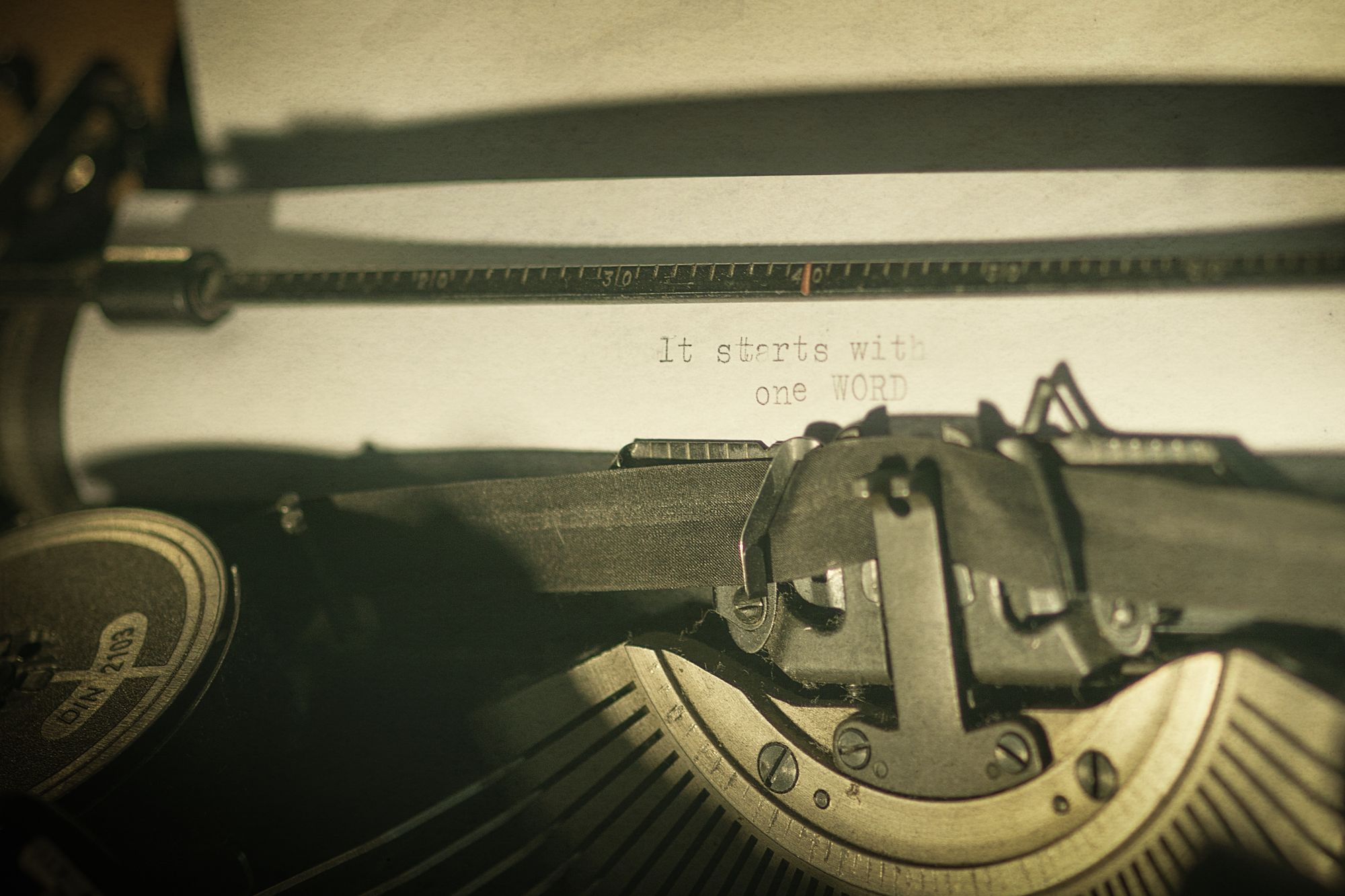

Few things are as dauting as the empty page. It’s so common to feel completely overwhelmed at first. To feel like maybe you need a better outline or more research. Or to get stuck before you even start because you’re simply not inspired. Maybe you just don’t have enough time in your day, so how do you motivate to yourself or others the time you spend writing?
All these feelings and thoughts are perfectly valid. They can also just be a roadblock. The perfectly plausible procrastination. Sometimes you just have to start. Just 100 words or fifteen minutes. The act of typing words, even bad words, can trigger your brain to quietly activate whatever neural pathways need opened to achieve that elusive writing flow.
In the words of William Forrester: “The first key to writing is... to write, not to think!”
Figure Out What “Not Ready” Actually Means
If you approach writing with the feeling on not being ready, the first step is to find out what that means to you. Break the feeling down into something tangible.
Maybe you don’t know enough about the story yet, the story feels too big, you don’t know where to start, or you’re waiting for inspiration. Take a moment for introspection. Different problems require different solutions.
You Don’t Need to Know the Whole Story Before You Start
If you are new to writing just knowing where to start, or how to start, can be a challenge. Are you a discovery writer or do you need a solid plan? This is otherwise known as plotter or pantser. If you don’t know the answer to that question, try to just start and go. If you know the opening situation, the main character, and roughly what they want, that can be enough to start exploring.
Ask yourself who your story is centred around. And what problem are they currently dealing with in their life? Then go from there.
If you find yourself getting stuck or petering out after a while, you might need the structure of a solid outline.
Give Yourself Permission to Write a Bad First Draft
Sitting down to start the first draft of a novel can feel overwhelming. It’s such a big job, and it takes months, if not years, to complete. It’s easy to be impatient, for many reasons. Maybe you suffer from shiny new thing syndrome. Or you need to make money, like, right now. Whatever the reason, you probably want to rush ahead and finish your novel already.
By all means, keep up the pace of your writing. It’s better to allow yourself to write a bad first draft in order to keep up momentum. To stay emotionally connected to your work. As long as you realize it will need work once it’s done.
For most people, editing while drafting will kill your momentum. Much better to put a first draft on paper, and then go back to edit later, especially if you are new to writing. Better to write now and fix later than to get stuck in a cycle of everlasting editing. You can fix rough scenes, but you have to have written them before you can fix them.
Your first draft doesn’t have to be terrible, but it absolutely does not have to be good yet either.
Let Momentum Create Confidence
The beauty about achieving some forward momentum in your writing is that words create possibilities and material to work with. Possibilities give you a springboard for additional ideas and scenes, and make the project feel more real. The more real it feels, the easier it becomes to continue.
Not always, obviously. Writing can still be hard, but momentum gives you something to work with. And when you look back and realize you’ve written thousands of words, it can give you a real confidence boost.
Make the First Step Smaller
If you find yourself overwhelmed at the sheer size of the task ahead, reduce it. Aim lower when you’re starting out. As the old saying goes, steady wins the race. Here are some things to try:
- Start out writing 200 words per day instead of 2,000.
- Focus on the dialogue. Write one conversation featuring your main character.
- Describe the room or place where the story begins.
- Write the moment immediately before the first scene.
- Write a scene that already lives in your head, even if it belongs in chapter twelve.
Remember, starting the project does not necessarily mean starting on page one.
Stop Waiting for the Perfect Opening
A lot of writers get stuck trying to write the perfect opening. We all know how important the hook is, so it’s natural to want to really nail it. And you definitely can, and should. But you don’t have to start there.
If you find yourself stuck in a perpetual rewrite cycle of the first scene or the first paragraph, write a placeholder and move on. It can be as simple as “the spaceship landed”. Just create a comment or make a note to flesh it out later, and move on to something that carries less psychological weight.
Very often, when you have written your last scene you will realize that you need to rewrite the first scene anyway.
Separate Writing From Research
There is a certain type of writer who just loves to do research. Nothing wrong with that. Research is great, and often necessary. Research can also go on forever if you’re really into it.
When you do your very first outline, make note of what topics have a real impact on your story. Then do the research on those topics until you have a good enough grasp of the topic to write about it without becoming an actual expert.
If you find yourself fumbling a bit in the dark while you’re writing, despite previous research, leave a placeholder and make a note to come back later. Only take a break from writing to do research if the facts make or break the plot. If you do take a break, make it as brief as possible to keep your forward momentum going.
All of the above is true for worldbuilding as well. Are you a worldbuilder or are you a writer? You know who you are.
What If You Really Aren’t Ready?
While procrastination and insecurity are very real issues writers deal with, sometimes you really are not ready to write yet. If you encounter any of the following it can be a sign that you should prepare more before drafting:
- You have no idea what the project is about.
- You need essential research before the premise works.
- You’re in the middle of another deadline.
- You’re trying to force a project you don’t actually want to write.
Okay, so you’re not ready. Now what? Depending on the reason you’re not ready the next step can be a number of things.
If you don’t know where your story is going you might need to brainstorm for more ideas or new ideas. Maybe you need better direction in the form of a more comprehensive outline.
If you find your character stuck in unfamiliar territory and you’re fumbling in the dark over how they would solve their current conundrum, you might need to do more research or worldbuilding.
Can’t figure out what your character is supposed to do or how they would respond? Flesh out your characters with better character notes and sample dialogue.
If you approach your preparation with intent and retain a sense of forward momentum you are good.
Start Before You Feel Ready
The TLDR of how to start when you don’t feel ready is this:
- Start with a very low word count
- Allow yourself to write the first draft imperfectly
- Prepare just enough to know what comes next
- And leave tomorrow’s problems for tomorrow.
FAQ
Do I need an outline before I start writing?
No. Most people find it helpful to have at least some highlights jotted down before getting started, but there are people who just go. Some people do full outlines, then write their first draft as a fleshed-out outline. And everything in between. You have to try different things and find whatever works for you.
How much should I know about my story before I begin?
You should know who the main character is and what sort of trouble they are dealing with. It can be in the form of a scene or dialogue that already lives fully formed in your head, but optimally you will know enough about the setting and the situation to be able to dive into it.
Is it okay to start writing in the middle of a story?
It is 100% okay. A novel doesn’t have to be a blanket knitted one row at a time. It can be a great, big quilt created in patches and stitched together at the end to form one cohesive and beautiful unit.
What if my first draft is bad?
It usually is, to be honest. Even for experienced authors. Accept it as par for the course and embrace editing.
How do I know whether I’m procrastinating or genuinely need more preparation?
A good rule of thumb is to ask whether the preparation you’re doing is solving a specific problem.
If you need to research how something works before you can write the next scene, or you genuinely don’t know what happens next, then some preparation is probably useful. If you’re reorganizing your notes for the fourth time you may be procrastinating.